|
Mazano Hub Weekly Newsletter — May 21, 2026 The First Customer
|
|
|
Every great African business begins with a single moment: someone says yes. Not a funding round. Not a viral post. Not a glowing product review from a stranger on the internet. The moment that actually matters is when a real person — someone you know, or someone who knows someone you know — hands over their money and trusts you to deliver.
That first customer is the hardest sale you will ever make. And most African founders are approaching it the wrong way. This edition of the Mazano Hub newsletter is about what it actually takes to win your first paying customer in Zimbabwe and across Africa — and why the approach that works here is different from anything you'll read in a Western startup playbook. |
|
|
|
|
|
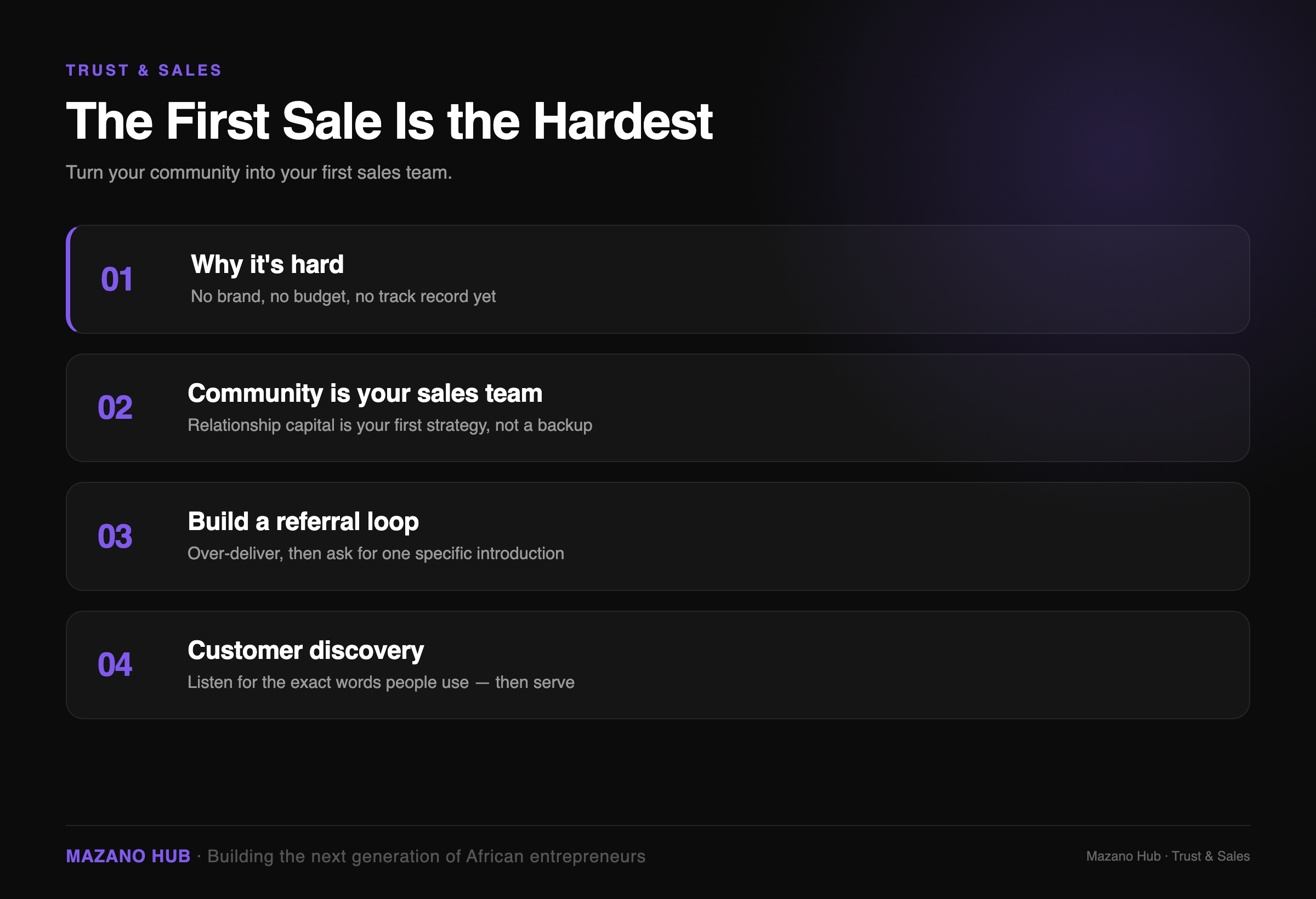
Section 1 Why the First Sale Is the Hardest You'll Ever MakeThe first sale is hard not because your product isn't good enough. It's hard because you haven't yet built the one thing that makes selling easy: proof. No testimonials. No repeat customers. No track record. You're asking someone to trust you before you've demonstrated, at scale, that you deserve that trust. In established markets, brands solve this trust deficit with money. Advertising budgets, celebrity endorsements, polished websites, and aggressive retargeting campaigns compensate for the absence of a personal relationship. If you see an ad often enough, you start to believe the product is credible. Most African founders don't have that budget. So they wait. They polish the product a little more. They redesign the logo. They update the Instagram page. They tell themselves they'll sell when everything is ready. But “ready” never arrives — because readiness isn't a product state. It's a confidence state. And confidence only comes from making the sale. The path out of this loop is to stop waiting for the conditions to be perfect and start looking for the one person who will say yes despite imperfect conditions. That person exists in your life right now. The question is whether you know how to find them. |
|
|
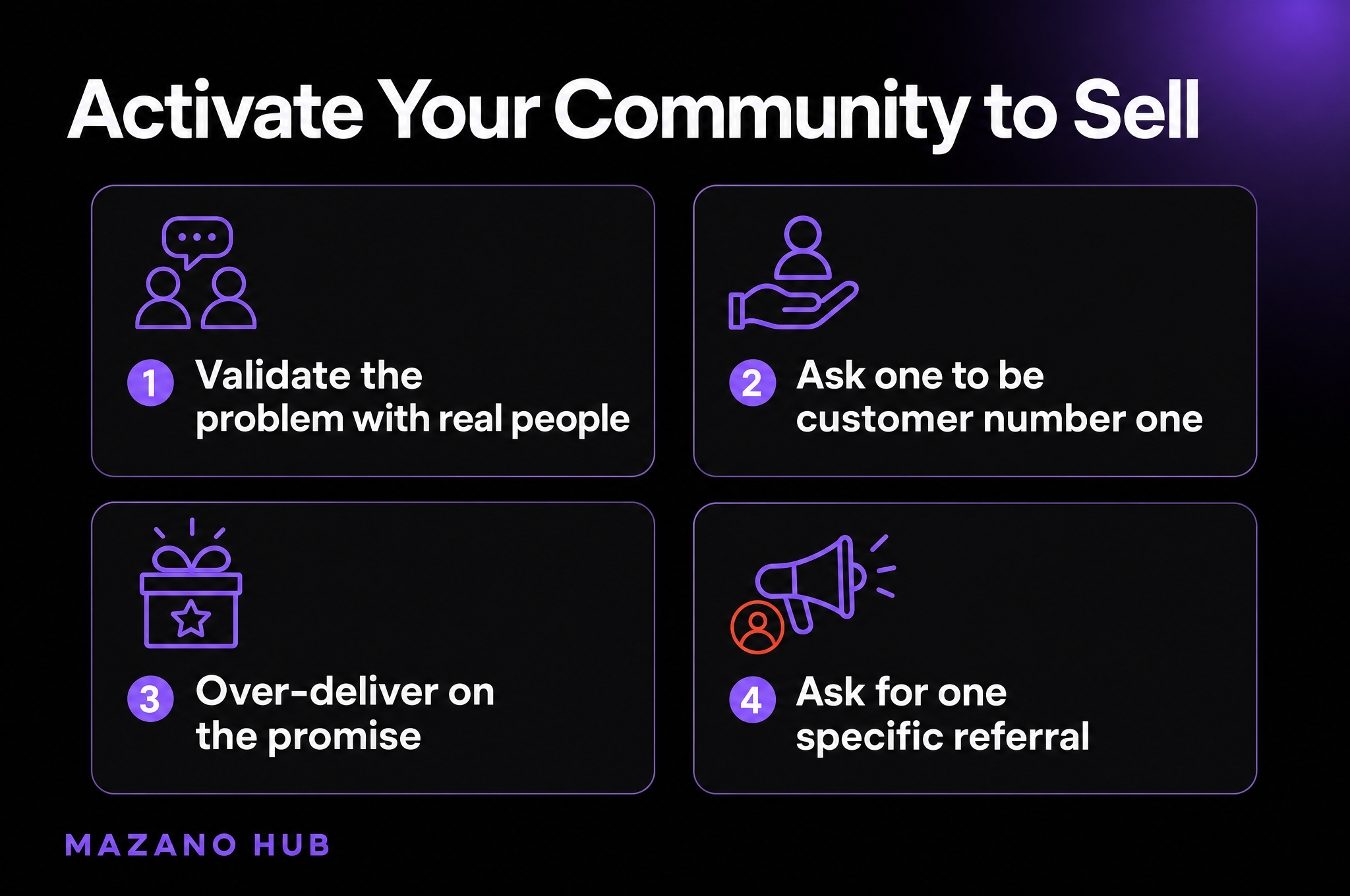
Section 2 Your Community Is Your Sales Team — If You Know How to Activate ItAfrican entrepreneurship runs on relationship capital. The stokvels, church networks, WhatsApp groups, and family referral chains that move Zimbabwe's informal economy are not just social structures — they are trust-distribution systems. When a member of your congregation recommends a product, it carries more weight than any ad you could run. The mistake most founders make is treating community as a backup plan. Something to deploy if everything else fails. The community becomes the strategy only after the Facebook ad doesn't convert and the email campaign goes unread. By then, goodwill has been spent on polished pitches that felt impersonal. The community notices. Community should be your first strategy. Before you build a website, before you design a logo, before you write a business plan, have twenty conversations with people in your network about the problem your business solves. Not pitches. Conversations. Ask what the problem costs them. Ask how they currently manage it. Ask who else faces the same challenge. When you've validated the problem with real people, ask one of them to be your first customer. Frame it honestly: “I'm building something that solves exactly what you described. I'd like you to be first. Here is what I will deliver and when.” That is not a pitch. That is an invitation. It lands very differently. |
|
|
Section 3 From Word-of-Mouth to a Repeatable Sales ProcessWord-of-mouth is not a strategy. It is an outcome. The difference between a founder who receives occasional referrals and one who builds a referral machine is intentionality. After you land your first customer, do three things: deliver above what you promised, ask them to tell one specific person, and track how the referral happened. The last step — tracking — is what most early-stage founders skip. They celebrate the referral but never study it, which means they cannot replicate it. In Zimbabwe's business environment, where marketing budgets are often near zero and advertising ROI is difficult to measure, your referral loop is your primary sales engine. Formalize it. After every delivery, send a simple WhatsApp message: “Thank you for trusting us. If you know someone who faces the same challenge, we would be honored to help them too.” This is not aggressive. It is stewardship. You built something that helps people. Being intentional about helping more people is an act of service, not salesmanship. That reframe — from selling to serving — changes how founders show up in every customer conversation. It changes the energy in the room. And it changes the answer from a reluctant maybe to an enthusiastic yes.
|
|
|
Section 4 What Customer Discovery Really Means in an African ContextCustomer discovery is a term borrowed from Silicon Valley that means something simpler than it sounds: talk to the people you want to serve before you build anything for them. Validate the problem before you invest in the solution. In Zimbabwe, customer discovery does not happen in focus groups or UX testing labs. It happens in church foyers, at market stalls, over a shared meal, at the school pickup line. It happens in the places where trust already exists. The research and the relationship are the same thing. What you are listening for is specific: the exact words people use to describe their problem. Not your words. Theirs. When you hear the same phrase three or more times from different people in different conversations, you have found something real. That phrase becomes your pitch. That pain becomes your product's reason for existing. The African entrepreneur's true superpower is cultural fluency. You understand how people in your community think, communicate, and make decisions. No outside investor or foreign competitor has that advantage. It cannot be bought or imported. Your first customer is not just a sale. They are a signal. They are telling you that your idea is worth pursuing. They are giving you permission — and a story — to share with every customer that follows. |
|
|
|
Applications are open. The cohort launches Q2 2026. |
|
|