|
Mazano Hub Newsletter African Startups Need Mentors More Than MoneyCapital without guidance is how promising businesses fail silently across the continent. April 5, 2026 | Mazano Hub Weekly |
||||
Chiedza had the idea, the hustle, and eventually, the money. A church grant covered her first production run. A diaspora investor sent $3,000. Her social media was growing. By every early measure, her textile business in Harare was working.
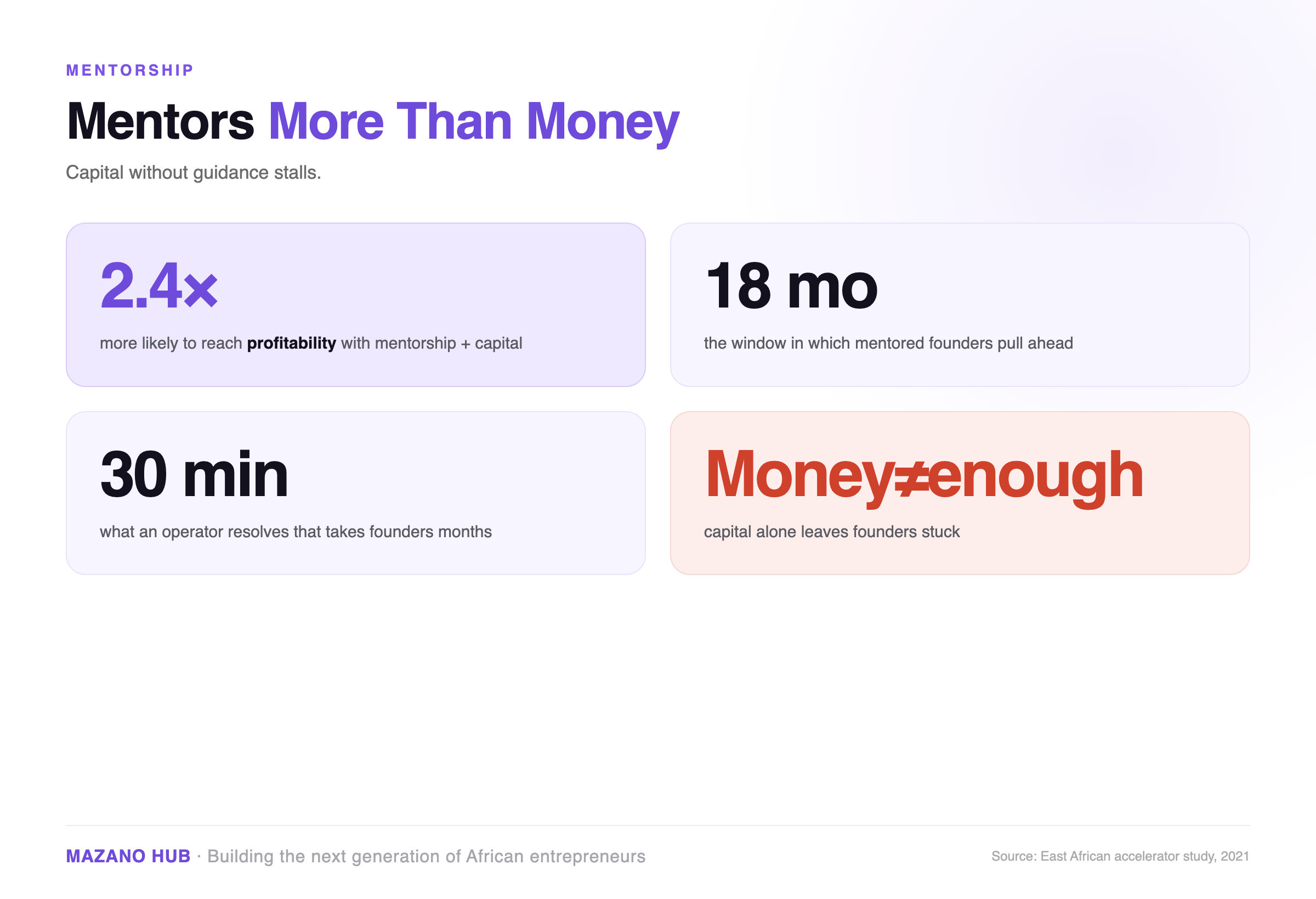
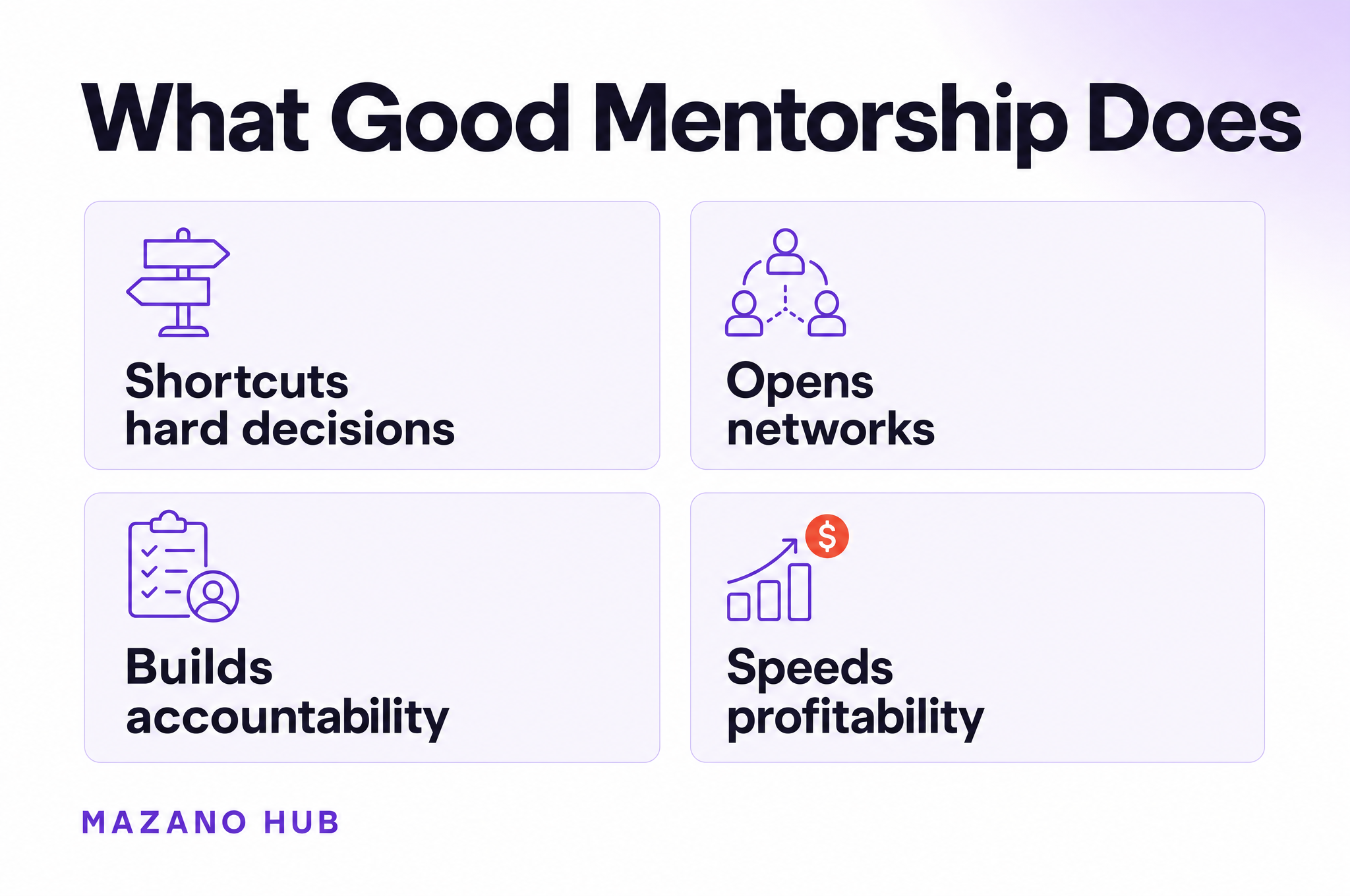
Eighteen months later, it was gone. Not because the market disappeared. Not because the money ran out first. It collapsed because she made three consecutive pricing decisions that an experienced manufacturer would never have made — and there was no one in her circle who had ever built a product business to tell her so. This is not an isolated story. Across Sub-Saharan Africa, billions of dollars are flowing into early-stage ventures through grants, remittances, and impact investment funds. The capital infrastructure is real and growing. But the guidance infrastructure — the experienced operators, the trusted advisors, the people who have already made the expensive mistakes — remains thin, fragmented, and deeply unequal. The result is predictable: money arrives and businesses still fail, for reasons that mentorship would have caught in week three. The Capital MythThe dominant narrative in African entrepreneurship development is a capital story. Close the funding gap. Unlock access to finance. Remove the barriers that keep great founders from getting seed money. These are real and important goals. The problem is that they are incomplete — and treating capital access as the primary intervention has produced decades of well-funded programs with disappointing survival rates. A 2022 analysis by the African Development Bank found that fewer than 30% of formally funded SMEs in Sub-Saharan Africa were still operating at the five-year mark. The World Bank's enterprise surveys consistently show that management capacity — not capital access — is the most frequently cited constraint among business owners who survive their first three years. What separates businesses that scale from businesses that fail is often not the size of the initial investment. It is whether the founder had access to someone who had been through the same decisions before. The research on mentored versus unmentored founders is consistent. A 2021 study of East African accelerator programs found that founders who received structured mentorship alongside capital were 2.4 times more likely to reach profitability within 18 months than those who received capital alone. They made faster pivots, spent less on avoidable failures, and were significantly more likely to seek follow-on investment at the right time. Capital creates the conditions for a business to grow. Mentorship shapes the decisions that determine whether it actually does. This is not a reason to stop funding African startups. It is a reason to stop treating funding as the whole answer. What Good Mentorship Actually DoesMentorship is not advice. The distinction matters. Advice is given once and forgotten. Mentorship is a sustained relationship built on trust, context, and accountability — and it changes how founders think, not just what they decide in any single moment. Three things happen when a founder has genuine access to an experienced mentor. First, their decision-making timeline compresses. Founders without mentors often spend months in analysis paralysis on questions that an experienced operator can resolve in a 30-minute conversation. A mentor who has hired and fired, who has navigated a cash flow crisis, who has dealt with a supplier dispute — that person transfers years of pattern recognition in a single exchange. The founder doesn't have to earn that knowledge through failure. They can rent it. Second, mentorship builds resilience. Early-stage entrepreneurship is relentlessly isolating. The weight of payroll, customer complaints, product failures, and investor rejections lands almost entirely on the founder. A mentor is not a therapist — but a trusted relationship with someone who has survived the same pressures provides a specific kind of steadiness that founders cannot get from peers who are going through the same thing simultaneously. Third, mentors open doors that money cannot buy. In Africa's relationship-driven business culture, a warm introduction from a respected operator carries more weight than a well-crafted pitch deck. Mentors who are embedded in industry and investor networks do not just provide guidance — they provide access. A single introduction from the right mentor can unlock a partnership, a supplier relationship, or a funding conversation that would have taken a founder two years to reach on their own. This is why programs that treat mentorship as an optional supplement to their core capital offering consistently underperform those that build mentor relationships into the program architecture from the start. The Zimbabwe GapZimbabwe has a well-documented entrepreneurial culture. The informal sector accounts for over 60% of economic activity. Street vendors, home-based manufacturers, and small-scale traders demonstrate extraordinary ingenuity and persistence in conditions that would paralyze businesses in more stable economies. The country has produced founders, operators, and business leaders who have built lasting institutions across the continent and the diaspora. But Zimbabwe's mentorship infrastructure is fractured. Two decades of economic instability accelerated a significant brain drain. Many of the country's most experienced business operators are now in the UK, South Africa, the United States, or Australia. Those who remained often built survival-oriented enterprises with limited capacity or incentive to invest time in formal mentorship relationships. The formal business associations that historically served this function have weakened. Corporate mentorship programs — common in East Africa and Nigeria — are almost absent in Zimbabwe. The result is a structural gap. Zimbabwe's founders are resourceful and motivated. But the ecosystem of experienced, accessible, and committed mentors that would accelerate their growth does not yet exist at the scale needed. Filling that gap requires deliberate effort — not waiting for it to develop organically, but building the structures, the matching systems, and the incentives that bring experienced operators into sustained relationship with early-stage founders. This is not a problem that philanthropy alone can solve. It requires people — diaspora professionals, faith-community leaders, retired executives, and mid-career operators — to make an active choice to invest their experience in the next generation. The structures to receive and deploy that investment need to exist. Right now, they largely do not.
How Mazano Is Building the BridgeMazano Hub was designed to address this gap directly. From the beginning, the program model has treated mentorship not as a nice-to-have but as structural infrastructure — as essential to the program as curriculum, co-working space, and seed capital. In Cohort 1, which begins recruitment in July 2026, every participant will be matched with a dedicated mentor from the first week of the program. These are not light-touch relationships. Mentors commit to monthly one-on-one sessions throughout the six-month cohort, participate in bi-weekly peer learning circles, and bring their networks to bear on behalf of the founders they are working with. The goal is not to provide generic business advice. It is to give each founder the specific, contextual, relationship-based guidance that changes how they make decisions. Mazano is actively recruiting mentors now. The ideal Mazano mentor is someone who has built or operated a business, led a team, navigated a funding process, or developed expertise in a sector relevant to African entrepreneurship — agriculture, health, technology, manufacturing, retail, or finance. They do not need to be in Zimbabwe. Remote mentorship is fully supported at the Harare facility via Starlink-enabled video. They need to have something real to offer, the willingness to offer it, and a genuine care for the people they will work with. The faith-driven dimension of Mazano's work shapes this mentor relationship in a meaningful way. Many of the founders Mazano serves are not just building businesses — they are building through a lens of stewardship, community responsibility, and Kingdom purpose. Mentors who share that orientation bring something specific and irreplaceable to the relationship. But Mazano's mentor network is open to anyone who respects that framework, regardless of their own faith background. Building this mentor network is one of the most important things Mazano is doing in the months ahead of Cohort 1. If you are reading this newsletter, you are likely someone with experience, networks, or connections that could change a founder's trajectory. The ask is simple: consider whether you could be that person for someone who needs it — and if so, take the first step.
|
||||
|
||||
|
|
||||
|
Mazano Hub 716 Maple Street, Sunway City, Harare, Zimbabwe | mazano.org You are receiving this email because you are a supporter, partner, or subscriber of Mazano Hub. • Unsubscribe |